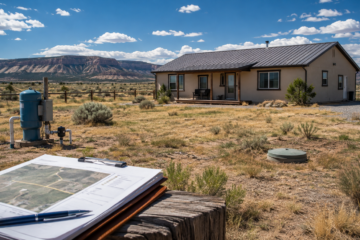

Your offer got accepted. The inspection came back clean. Then your lender sends over a checklist for closing, and one line stops a lot of first-time buyers in their tracks: proof of homeowners insurance, active before the day you sign. Suddenly you are shopping for a policy on a deadline, comparing quotes that are hundreds of dollars apart, and wondering why the number is what it is.
Four Corners homeowners insurance comes with a few local realities that shape what you will pay and what your policy actually covers. Here are the questions buyers ask us most, answered plainly.
Why does my lender care whether I have insurance?
Because the house is their collateral. Until the loan is paid off, your lender has a financial stake in the property, and they are not willing to let that stake burn down or blow away uninsured. A hazard insurance policy is a standard condition of nearly every mortgage, and that includes zero-down loans like the VA loan and USDA financing. No policy, no closing.
Two things follow from this that catch newer buyers off guard. First, your lender will usually collect your insurance premium along with your monthly payment and hold it in an escrow account, then pay the policy for you when it comes due. The monthly payment you were quoted often already has insurance baked in. Second, if you ever let the policy lapse, the lender can buy a policy on your behalf and bill you for it. That force-placed coverage is typically far more expensive than what you would arrange yourself, and it protects the lender, not your belongings. The lesson is simple. Keep the policy active.
Why are premiums higher out here than buyers expect?
New Mexico is not the cheapest state for homeowners insurance, and the reason usually comes down to two words: wildfire and hail. Statewide cost estimates swing widely depending on the source and the assumed rebuilding cost, landing anywhere from roughly $1,200 to more than $3,000 a year. That spread tells you something important. The statewide average is close to meaningless until someone quotes your specific address.
What actually drives your number is a handful of factors: the cost to rebuild your particular home, your ZIP code and its risk profile, your roof’s age and material, your claims history, and your credit. Note that first item carefully. Your policy’s dwelling coverage is based on what it would cost to rebuild the home from scratch, not what you paid for it and not its resale value. In a market where the typical Farmington home sells for around $226,000, the rebuild figure your insurer uses may come out higher or lower than the price on your contract.
One more thing worth knowing before you shop. Some insurers have grown cautious in higher-risk parts of New Mexico, and policy nonrenewals have become more common. If you ever struggle to find coverage on the open market, the state’s FAIR Plan exists as a backstop. If you are relocating to the area for work and are not used to Southwestern risk factors, that is one more reason to get a real quote early rather than assume your old state’s rates will carry over.
Is wildfire really a risk in the high desert?
More than newcomers tend to think. Farmington takes it seriously enough to maintain its own wildland-urban interface map, built by the city’s planning division alongside the fire department, San Juan County, and the BLM Farmington Field Office. It rates areas as either low to moderate or high risk based on factors like vegetation and how densely structures are built. The 2026 fire season made the point early, arriving nearly a month ahead of schedule after a winter of record-low snowpack and a stubborn drought.
Risk climbs the closer a property sits to open wildland, which makes it a bigger factor for rural and edge-of-town homes than for a house in the middle of Farmington. If you are looking at acreage, our guide to buying rural property in San Juan County is worth reading alongside this one. The encouraging part is that wildfire risk is partly in your hands. Creating defensible space around the home, using fire-resistant materials, and following Firewise practices genuinely lower the danger, and they can also make a property easier and less expensive to insure. Before you fall for a listing, check the address against the New Mexico Wildfire Risk Portal so there are no surprises later.
What about wind and hail?
Anyone who has spent a spring here knows the wind, and hail rides along with our summer storms. According to the New Mexico Office of Superintendent of Insurance, hail is the single most common homeowners claim type, so this is no minor line item. A few things to look for in a policy:
Many New Mexico policies carry a separate deductible for wind and hail, and it is often written as a percentage of your dwelling coverage rather than a flat dollar amount. On a home insured to rebuild for $250,000, a 2 percent wind and hail deductible is $5,000 out of pocket before coverage begins, which is a very different figure than the $1,000 all-peril deductible most people picture. Read the declarations page and know both numbers.
Watch for two more clauses. Some policies exclude cosmetic damage, meaning dents that do not affect function may not be covered. And many insurers now use roof schedules that pay older roofs at their depreciated value rather than full replacement cost, with that reduction often kicking in somewhere past ten to fifteen years of roof age. That detail matters in an area with plenty of older housing stock. When a storm does roll through, the state insurance office recommends inspecting for damage, photographing everything before you clean up or repair, filing promptly, and being wary of the door-knocking contractors who tend to follow hailstorms.
What isn’t covered that people assume is?
The big one is flood. A standard homeowners policy does not cover flood damage, full stop. If a property sits in or near a floodplain, which is worth checking for homes along the Animas and San Juan rivers, you would need a separate flood policy through the National Flood Insurance Program or a private insurer. Standard policies also typically exclude damage from earth movement and cap certain categories of personal property. None of this means a policy is bad. It means you should understand the edges of your coverage before you need it, not after.
How do buyers keep the cost down?
A few moves make a real difference:
- Gather at least three quotes built on identical coverage. A cheaper premium that quietly trims your dwelling limit or raises your wind and hail deductible is not actually cheaper.
- Consider a higher all-peril deductible if your budget has room. It lowers your premium in exchange for taking on more of the smaller claims yourself.
- Bundle your home and auto policies, which commonly earns a double-digit discount.
- Document your mitigation. Defensible space, an updated roof, and security features can all pull the number down.
- Ask about discounts tied to military service or profession. Some carriers offer them, and given how many veterans and first responders call the Four Corners home, it is always worth asking.
- Protect your credit and skip the small claims you could absorb yourself, since claims history follows you to your next renewal.
A short list to run before closing day
Keep these in your back pocket as you move toward the finish line:
- Get a real quote for the specific address early, not a statewide estimate.
- Confirm your dwelling coverage reflects the rebuild cost, not the purchase price.
- Find your wind and hail deductible and understand what it would cost in an actual claim.
- Check the property against both wildfire and flood risk maps.
- Ask whether flood or any other separate policy is something this particular home needs.
Insurance rarely makes or breaks the decision to buy a home, but walking in informed keeps it from becoming an unwelcome surprise at the closing table. As a veteran and retired law enforcement owned brokerage, we help buyers across Farmington, Aztec, Bloomfield, Kirtland, and Flora Vista think through the full cost of a home rather than just the price tag, and we are glad to point you toward reputable local lenders and agents. When you are ready, work with someone who knows the area. Call David at 505-533-6064 or reach out through our contact page, and if you would like help finding the right person, here is what to look for in a real estate agent.
This article is for general informational purposes only and does not constitute insurance, financial, or legal advice. Coverage terms, premiums, deductibles, and availability vary by property, carrier, and individual circumstances, and they change over time. Verify current rates, policy details, and coverage requirements with a licensed insurance professional and your lender before making decisions.